Water Skiing
Water-skiing is increasing in popularity in recent years, especially in the form of wake boarding and bare foot skiing. Unlike snow skiing injury rates are much lower, mainly due to the level of impact and reduced activity time in water skiing.
Injuries to the head and lower leg (ankle) are most common, however contusions, lacerations, strains and sprains occur in all areas of the body, due to the nature of the body being thrown and bounced through the water after a fall.
In ski jumping, a helmet and personal flotation device is mandatory, and certainly recommended for beginners, or for skiers getting a feel for the water (beginning of the season). It is essential that the towboat driver and equipment being used are fully qualified and maintained to a safe standard, with the use of an observer on the boat to inform the situation of the skier.
Developments in clothing and binding for skis are reducing the risk of serious injuries even further, however poor fitness, overuse and lack of skill are increasing strains and sprains, especially in the area of trick skiing and jumping.
Warming up the body and stretching will certainly help reduce muscular / joint injuries, as well as enable the skier to have a greater range of movement, essential in the demanding area of slalom skiing.
Begin your warm-up with the mobility exercises, spending extra time on areas that me feel tight and tense, such as the ankles and knee joint. If possible spend a minimum of 5 minutes light running or skipping to increase blood flow to make your muscles more pliable, avoid running in a wet suit, or performing any of the warm-up exercises in restrictive clothing.
The dynamic exercises, should be carried out under control to prepare your body for at least 10 minutes. Concentrate on aiming to simulate the movements that you will be doing on the water on dry land, you may even rig up a towrope and practice coming up out of the water.
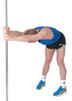
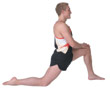
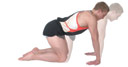
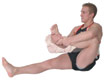
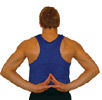
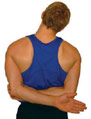
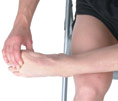
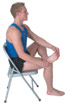
Prior to actually skiing and getting your safety / skiing equipment on, perform these sports specific stretches.
    |
     |
    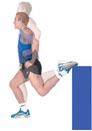 |
   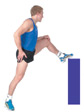  |
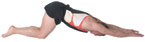    |
After you've finished your ski, you should have as shower to help warm-up the muscles again, and also to remove either salt from the sea, or bacteria from the water. The wearing of both nose clips and earplugs can help prevent numerous illnesses associated with untreated water.
Warm-up your muscles with the dynamic movements, then have a hot shower to remove any dirty water from your body, prior to performing the cool-down stretches, utilising other stretches in the book for areas that feel tight, once you have removed all restrictive clothing.
Regular skiers should aim to spend at least half an hour a week purely working on developmental stretching throughout the ski season in order to get the most out of this seasonal sport.