Jogging / Running
Running injuries are easily prevented, if a few simple guidelines are adhered too.
The first main factor is your footwear, buying the right training shoes, this does not need to be either a science or a fashion statement. Checking both the sole and rear of your shoe, will tell you want kind of foot placement and running style you have. Ideally your foot should strike the ground with the heel, and you should push off with the ball of your foot.
Some people role inwards on their heel (pronating), and as such the heel on the inside of the shoe will often show signs of wear and damage on the inside. Motion control shoes will have extra support on the inside (firmer cushioning) to help prevent the foot rolling inwards (pronating). People whose wear is on the outside of the heel, (supinator) should look for a shoe with good cushioning, especially on the outer heel. Excessive rolling of the foot may require the runner to use specially designed orthotics to aid foot placement.
As with all sports, using the right footwear will prevent injury, long distance runners, or those that are of a larger build, should avoid using racing flats, as these offer very little support and cushioning.
Overuse injuries in runners are most often caused by running too far, too fast, too soon. Aim to increase your running mileage by no more than 10% per week, this will allow your body to strengthen and develop, whilst maintaining good running form throughout your run. Run on smooth flat surfaces (running track), avoid running in the road, as these tend to have a beveled edge to aid water removal. If you feel pain, especially in the lower legs, aim to ease of the running for a while 5 - 10 days, using other methods of non-impact exercises to keep fit (cycling - rowing).
Prior to your run you should perform the mobility exercises, followed by the dynamic movements to help warm-up the muscles and joints. Ease gently into your run for 5 - 10 minutes with light jogging before performing all of the warm-up stretches plus these running specific stretches. After every fourth stretch, spend a further minute light jogging again to keep your body warm, or alternatively ease into your running speed after a further 5 minutes light jogging.



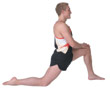

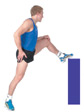

Commence your cool-down at the end of your run, spend at least 5 minutes light jogging to gradually allow your heart rate to come down. Wear warm clothes and take in some fluid at this point, bringing your jog down to a fast walk, aiming to stride out the legs, lifting up on your toes with each movement.
Carry out the stretches above, before moving onto the cool-down stretches, aiming to hold and each stretch for 15 seconds, and then taking a deep breathe and repeating the stretch again as you slowly exhale concentrating on taking the stretch slightly further.