Sailing
Sailing is like most land-based sports in that it can require great demands of the human body, especially during rough sea conditions, and long races lasting many weeks / months, where the body is not only bruised, but also often restricted of nutrients to stay in peak physical condition.
Injuries are often as a result of trauma, and consist mainly of lacerations and bruising, but also a high number of fractures; sailors having a better knowledge of the craft they're sailing on can reduce a number of these.
Regularly sailors suffer from overuse injuries, with those on larger yachts sensitive to both upper extremity and low back injuries, especially "sewers" and "grinders" who often place their biceps and lower spine under extreme strain. Whilst smaller crafts tend to place more pressure on the lower limbs, with the tension within the quadriceps often causing pain to the knee, known as patella femoral pain syndrome (PFPS).
For sailors taking part in long races, it is wise to learn each other's skills, and change duties on the craft to enable muscles to be given time to repair. Adaptive shortening due to the muscles constantly being used, can take place, especially in the biceps muscles, so regular maintenance stretching needs to take place to prevent this.
The warm-up can obviously be difficult if on the water, as it needs to be safe. Begin with suitable mobility exercises, then move into performing the dynamic exercises. The following stretches should be performed as often as possible to reduce overuse injuries, ideally at least once every 3-4 hours during long races.

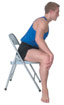

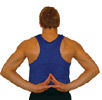

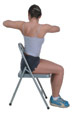
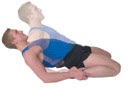
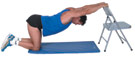


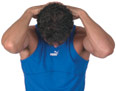
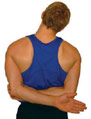
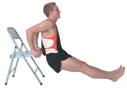

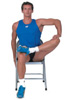
Sailing for short periods, (few hours or day) would still benefit from stretching to reduce muscle soreness and improve sailing ability. Spend time performing the mobility exercises and then 5-10 minutes light aerobic work, fast walking etc, before performing the warm-up stretches, followed by the above stretches.
After you have finished your sail, you will certainly find muscles feeling sore, and as such stretching will relieve some of this muscle tension. Aim to re-circulate the blood again throughout the body, especially in the lower extremities, with fast walking, whilst performing the dynamic movements in order to increase the heart rate. Look at the cool down stretches, and concentrate on holding each stretch for 15 seconds prior to inhaling and extending the stretch as you exhale for a further 15 seconds.