Snow Skiing
Skiing for most people is in the form of a 7 day holiday once a year in the pursuit of good snow. Time should be given prior to your holiday to concentrate on your fitness in order to get the full benefits from only a short period on the snow.
Fortunately with modern equipment and ski instruction at dry ski schools, serious injuries are reducing in number, however overuse injuries and muscle soreness prevent many people from improving their skiing.
Beginners and less experienced skiers have a higher risk of injury than intermediate or advanced skiers, with falls being the main cause of injury. During a fall, aim to clench your fist away from the ski pole, as this will help prevent you dislocating or damaging your thumb joint. Sprains, lacerations, fractures and bruising are the most common types of injuries, with the knee, shoulder and thumb being the main areas. More accidents occur in either the late morning or afternoon when your muscles are often tired, and your body is feeling hungry, so aim to drink (not alcohol) and eat snacks throughout the day.
Snowboarders have fewer knee injuries due to both feet fixed on to the board, however they are vulnerable to head injuries, especially when participating in aerial maneuver's, so headgear is advised.
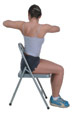
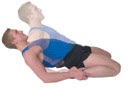
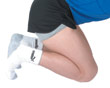
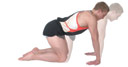
Look at beginning your warm-up in the comfort of your room, by first having a warm shower or bath, followed by all the mobility exercises. You may feel particularly sore and stiff from the previous days skiing in certain areas of your body, so spend extra time mobilising these joints. Use the aerobic warm-up, to help increase the blood flow, in order to make the muscle more pliable. Follow this by the warm-up stretches, and also look at the stretches below specific to skiing. All these stretches are best performed in a warm comfortable room, where your muscles will be more pliable, and your clothes will stay dry.
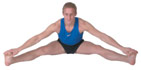
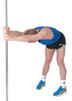
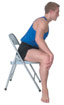

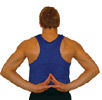





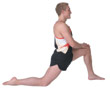
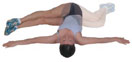
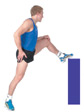
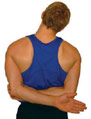


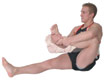
Aim to stay warm with suitable clothing whilst traveling up the slope, and prior to beginning each ski look at performing 10 -15 standing squats. Start your skiing on easier runs progressing gradually in order to warm-up the muscle and improve your coordination and balance.
The cool down is best like the warm-up completed in the comfort of your room after a warm shower, ideally 15 minutes after your last ski run. You may wish to warm-up aerobically, especially if your muscles are already feeling sore. Look at the cool-down stretches, holding each stretch for 15 seconds prior to inhaling and extending the stretch for a further 15 seconds whilst you exhale. Due to falls and sore muscles not normally used, you may wish to choose other suitable exercises within this book associated with that part of the body.