Cycling
Cycling either indoors on a gym bike or outside in the open air is an excellent form of exercise for the cardiovascular system (heart and lungs), and also a low impact leg workout.
Competitive cyclists compete in either short sprint races on a track or road, or longer endurance style races such as the Tour de France (23 days).
Those that compete on the track or short races on the road should spend adequate time preparing for their race by first spending 5 minutes warming up their joints with the mobility exercises, and then a minimum of 15 minutes active warming up on a bike.
The bike warm-up should begin with a light gear, gradually increasing the cadence (pedal speed) and then increase the resistance. This can be performed on a turbo trainer or on your own bike.
Cyclist's injuries are often related to strains on the lower back, neck and wrists as these areas unlike the legs are often fixed statically throughout the cycle ride. Try and avoid letting these muscles become sore by allowing them to have a simple stretch during your ride, for example sitting upright for a few seconds or cycling out of the seat will help ease the tension.
After your warm-up phase complete the warm-up stretches and the sports specific stretches prior to getting back onto your bike and continue to stay warm whilst waiting for the start of the race. You should allow a minimum of 30 minutes to warm-up and stretch if racing.

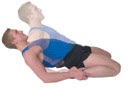


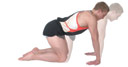

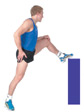

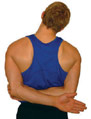



For cyclists who are simply going out on a bike ride, spend time performing the mobility exercises then for the first 5 - 10 minutes cycle at an easy pace both in and out of the seat. At the earliest opportunity after this active warm-up come off the bike in a safe place, (don't stretch in the road) and perform the quick stretch routine.
The cool down period should consist of 5 minutes light cycling, designed to bring the heart rate down, whilst sitting up-right to ease the tension on the lower back.
On completion of your cycle ride, wear warm clothing and carry out the mobility exercises for the back, shoulders, arms and wrists again to help relax these areas. Carry out the cool down stretches, holding each stretch for a period of 15 seconds before taking a deep breath and increasing the stretch as you exhale slowly.
PNF stretching on the back, hamstrings, and quadriceps, carried at once a week will help prevent muscle shortening, and thus give you greater flexibility, increased cycling ability and reduce the chances of muscle soreness.