Volleyball
Volleyball being a non-contact sport, actually has a high rate of injuries, fortunately however most of these are not serious.
Most injuries occur from overuse or jumping, especially when blocking or spiking the ball. Correct jumping and ball handling techniques will reduce the number of injuries, likewise taping of fingers and ankles will provide additional to strength too vulnerable areas.
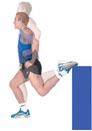
Plyometric (explosive jumping) training should be carried out at least twice a week, especially in the off season, aiming for players to take longer steps prior to jumping, with the emphasis on achieving height not forward momentum. Care should always be taken on landing, especially in the "Conflict Zone", as injuries caused by another player landing on your foot are common.
Playing on sand or wooden floors reduces the impact of each landing or fall, compared to concrete. Knee pads, wrist guards and supportive trainers should all be warn when playing on hard surfaces.
Pain below the knee (Patellar Tendonitis) is one of the most common overuse injuries, due to the jumping, landing and squatted position players undertake throughout a match and training.
With all muscle groups being used, adequate time needs to be given for the warm-up and stretch. After your mobility exercises a minimum of 10 minutes active aerobic warm-up, light jogging / skipping followed by the warm-up stretches. Dynamic movements, need to be worked until a light sweat is built up in order to make you fully match prepared.
Incorporate ball handling and passing drills into your dynamic warm-up in order to stimulate your hand eye co-ordination. Remember with both your passing and jumping to start with small movements, gradually building up to match level.
Throughout the game continue to perform the mobility exercises, especially for the wrists and ankles and also any of the following stretches whenever you get chance, especially between sets or games.
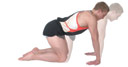

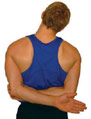
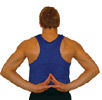
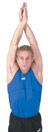

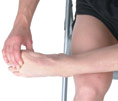
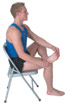
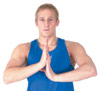
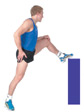


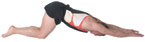

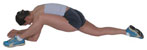

The cool down should again consist of light jogging for 5 - 10 minutes in order to help stretch out the legs, combined with swimming actions for the arms to help loosen off the shoulder and arm muscles.
Carry out the cool down stretches, holding each stretch for 15 seconds prior to inhaling and increasing the stretch for a further 15 seconds as you exhale. During this sequence of stretches you may find particular areas stiff, look within this book at suitable stretches for that area, and perform another stretch.