Soccer / Football
Soccer is rapidly growing in popularity, for both boys and girls under the ages of 15. Being a team sport there is obviously a highly competitive element to the game, which can result in players on both sides becoming a little frustrated and as such have a tendency to commit fouls on to the opposing players.
The most common sites of injuries in soccer players are the knees, ankles, and feet, as a result of either a blow from another player or the twisting movements placed upon these joints. Injuries can be either acute (caused by a single twist or blow) or overuse (caused by a build-up of stress to a joint or muscle / tendon).
It is essential that protective clothing in the form of suitable boots with studs and shin guards are worn by all players, with those prone to ankle injuries advised to wear appropriate support.
During both training days and matches, all players should spend a minimum of 30 minutes warming up and stretching, due to the vast array of movements and the explosive nature of the game.
The warm-up should commence with 5 minutes of mobility exercises, prior to light jogging around the pitch. The pace should be slow, with warm clothing applied. After 5 minutes look at changing the movement to side stepping in both direction, leaning slightly forward whilst taking your heel towards your buttocks and finally jogging forward with a high knee lift and sprinting arm movement.
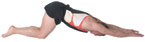
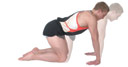
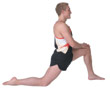
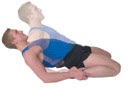
Static warm-up stretches should be carried out along with the following sports specific stretches.
    |
     |
   |
   |
After an active warm-up and stretch, motor-neurone skills should be prepared by players performing skill drills with a ball, and simply passing to each other. Foot drills, will help prepare the body for the movements associated with the game.
    |
Goalkeepers will need to perform additional stretches, however they should still warm-up with the main group, and aim to keep actively moving throughout the game, especially the arms and feet to prevent these areas becoming cold resulting in slower reaction times and reduced flexibility.
During the half time period of a match, it is vital to stay warm both actively and with suitable clothing, and whilst waiting for the match to begin, carry on stretching especially the lower leg where 80% of all injuries in soccer are associated.
Substitutes should warm-up with the main squad and aim to stay actively warm throughout the match, with managers giving these players as much notice to prepare prior to going on to the field.
The cool down should be a gentle light jog around the playing field for 5 minutes before the cool down stretches carried out. PNF stretching, especially for the hamstring and adductor (inner thigh) muscles should be carried out at least twice a week in the playing season, as these muscle are prone to becoming tight and injured.