Back Care
Lower back pain is the second most frequent cause of lost workdays in adults, with four out five adults experience significant problems.
Often caused as a result of excessive strain, due to poor posture, being overweight, or by lifting heavy or incorrectly. For some, especially the elderly, enduring back pain may be due to arthritis or loss of bone density (osteoporosis) muscular strength and flexibility.
Regular exercise, especially swimming if you suffer from back pain, will help prevent your muscle mass and bone density decreasing.
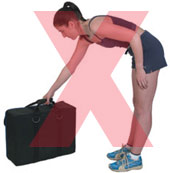
Use correct lifting technique, get help if the object is awkward, and always remember to keep your back straight, lifting with your larger leg muscles.
Maintain a good posture, regardless of standing or sittings, aiming to avoid staying static, keep the back mobile. Whilst sleeping, adopt for a firm mattress that enables your spine to remain straight, not sinking into the bed.
Persistent backache is often a result of obesity, which can place undue strain on the spine, or emotional stress, which causes individuals to unconsciously tense their muscles.
Strengthening and stretching the muscles of the lower back and abdominal area will help prevent back pain occurring. Low back pain can be uncomfortable, however not life threatening, if this pain is associated with leg weakness or numbness, bladder or bowel problems there may be pressure on your nervous system, and as such seeking medical advice is recommended.
|
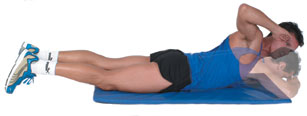
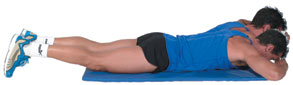
1 Arm Dorsal Raise Progress to performing two arm dorsal raises; remember to keep both feet in contact with the floor at all times. |
|
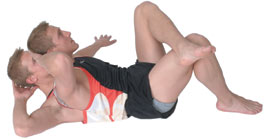 |
Simple Obliques Cross one foot over the other leg, resting it upon the thigh. Extend the arm of the crossed leg side outwards; palm facing down to the floor. Support the weight of your head with your other hand, keeping your chin off your chest, and avoid pulling on your neck. Slowly take your supporting elbow up towards your opposite knee. Avoid forcing the movement, travel as far as your abdominal strength allows, repeat 5 - 15 times each side. |
|
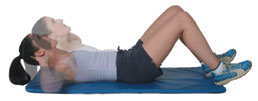
Simple Sit Ups Support the weight of your head with both hands, keeping your chin off your chest. Commence the exercise by lifting your shoulders off the floor, keeping your elbows out to your sides, lifting your head only 6 - 12 inches off the floor. Perform 10 - 20 repetitions, 1 every 2 seconds. |
 |
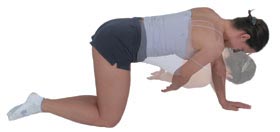 |
Hand Through Extend the other arm across your body, twisting slowly at your waist to take the hand out to your opposite side. Repeat 5 - 10 times each side. |
|
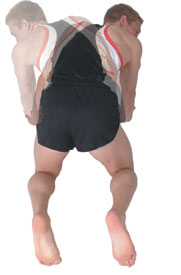
Pluto Sniffs Keeping your knees and hands in contact with the floor twist from your sides, aiming to look over one shoulder towards your hip. Alternate from one side to another, in slow steady movements, gradually increasing the range of movement. |
 |
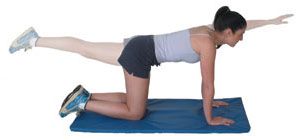 |
Supermans Extend your other arm straight out to your front, whilst extending the opposite leg to your rear. Bring both arm and leg back inwards, and repeat either again on the same side, or alternate sides, performing 10 - 20 repetitions each side. |
|
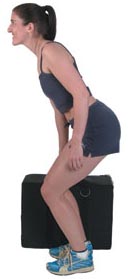
Correct Lifting Stand as close as possible to the object to be lifted, bending the legs, whilst holding the object securely ideally using carrying handles. Keep your back and arm straight throughout the lift, slowly straighten your legs to lift the object in a steady movement, avoiding any jerking. Take small movements with your feet when walking, especially around corners. Avoid lifting any object, which requires you to bend or twist during the movement, for example luggage conveyor belts. If carrying numerous bags, (shopping) aim to spread the weight each side evenly to balance out the strain on the lower back. |
  |
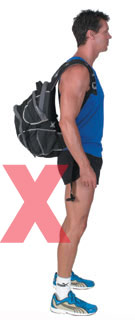 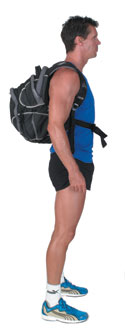 |
How to Carry Keep heavy objects close to body, at shoulder height, with your lighter items at the bottom and away from your body. Small rucksacks should be worn high, and snug to the upper back / shoulder area, with front straps pulled tight, and any frontal straps used to prevent movement whilst walking. Larger rucksacks ideally will have a hip belt, which you should tighten first prior to the shoulder straps to help distribute the weight predominantly onto the hips. |
|
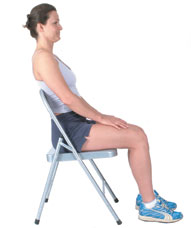
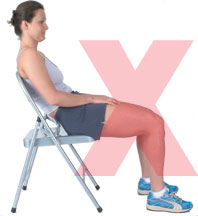
How to Sit Seat cushions need to be sloping at the front, with your legs not in contact with the chair, feet flat on the floor to improve circulation. Armrests reduce the strain on your shoulders, neck and back.
Your seated position should enable you to keep your spine upright, with your elbows close to your sides, buttocks touching the rear of the chair and your knees even or slightly higher than your hips. Breathable fabric, castors, height adjusters and swivel legs are all beneficial. |
  |
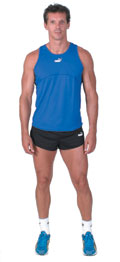 |
How to Stand Aim to keep your head up, with your earlobes in line with the middle of your shoulders. Shoulder blades should be back, with chest forward, stomach in and legs straight. Keep feet firmly on the floor facing forward shoulder width apart. Avoid standing in the same position for long periods. |